
Individual Therapy
For California residents
Many of the people who find their way here have spent years moving through life in a state of quiet survival. On the outside, they’re high-functioning — tending to others, managing responsibilities, holding it all together. Inside, there’s a sense that something hasn’t quite landed: the body feels tense, emotions feel unpredictable or muted, and relationships feel both necessary and draining. My work meets this place with compassion and curiosity. Through a NARM and depth-oriented lens, therapy becomes a space to understand the patterns that formed in survival and to gently invite new possibilities for connection, regulation, and choice.
Trauma doesn’t always come from a single event — it can live in the slow accumulation of stress, the absence of support, or the roles we learned to play to stay safe. In our work together, we focus on helping your nervous system find steadiness, your mind make meaning, and your body remember how to rest. Whether you’re processing developmental trauma, relationship wounds, identity transitions, or the long echo of caregiving and loss, this is a place to return to yourself — not by erasing what’s happened, but by integrating it into a fuller, more grounded sense of who you are.
Trauma Responses Hidden Inside “Medical Resilience”
In the hereditary cancer community, like in so many communities, trauma is often masked by courage. People are praised for being proactive—getting tested, staying strong, fighting battles, kicking cancer’s ass, surviving surgeries, “doing what needs to be done…”
Yet underneath that competence, there is often a nervous system that has been running on overdrive for months or years.
The fight-flight-freeze (even fawning) responses that once protected them from unbearable fear, grief, or uncertainty can start to show up as anxiety, depression, irritability, medical avoidance, disconnection from the body, depression, or a loss of intimacy in relationships.
These are not signs of weakness. They are the body’s intelligent attempts to regulate unbearable experiences in an environment that demands control when control is impossible.
Why a Developmental Trauma Lens Matters
As a therapist deeply trained in developmental and complex trauma—and a Master Therapist in the NeuroAffective Relational Model (NARM)—I understand how early attachment patterns and survival adaptations live in the body.
When a person faces cancer— and even cancer risk— those same survival templates can re-activate: The deep sense that we are broken or unworthy, the fear of being a burden, the pressure to stay strong, focus on others, or the way we simply shutdown when we feel too much.
In our work together, we slow down these automatic responses with respect rather than judgment. By bringing mindful attention to the sensations, emotions, and beliefs that surface, clients begin to integrate the parts of themselves that disconnected in order to survive—whether that disconnection began in childhood or during their medical crisis.
Here, we are not focusing on “getting over” cancer or risk, we are focusing on restoring connection: coming home to your body, your relationships, and your sense of aliveness.
The Process of Re-Organization
In therapy, we explore what you needed to disconnect from in order to survive, and how those same protections might now be impacting you— your capacity for rest, for joy, for intimacy and for peace.
Together, we don’t try and “fix” what’s “wrong.” We honor the wisdom of your body and create a space to allow it to unwind what you are holding. We bring our attention and intention to what you are experiencing, and honor what you went through. Together, we explore a space where fear can coexist with love, vigilance can soften into presence, and you can experience safety not just as the absence of threat, but as the felt sense of being supported, seen, and whole.
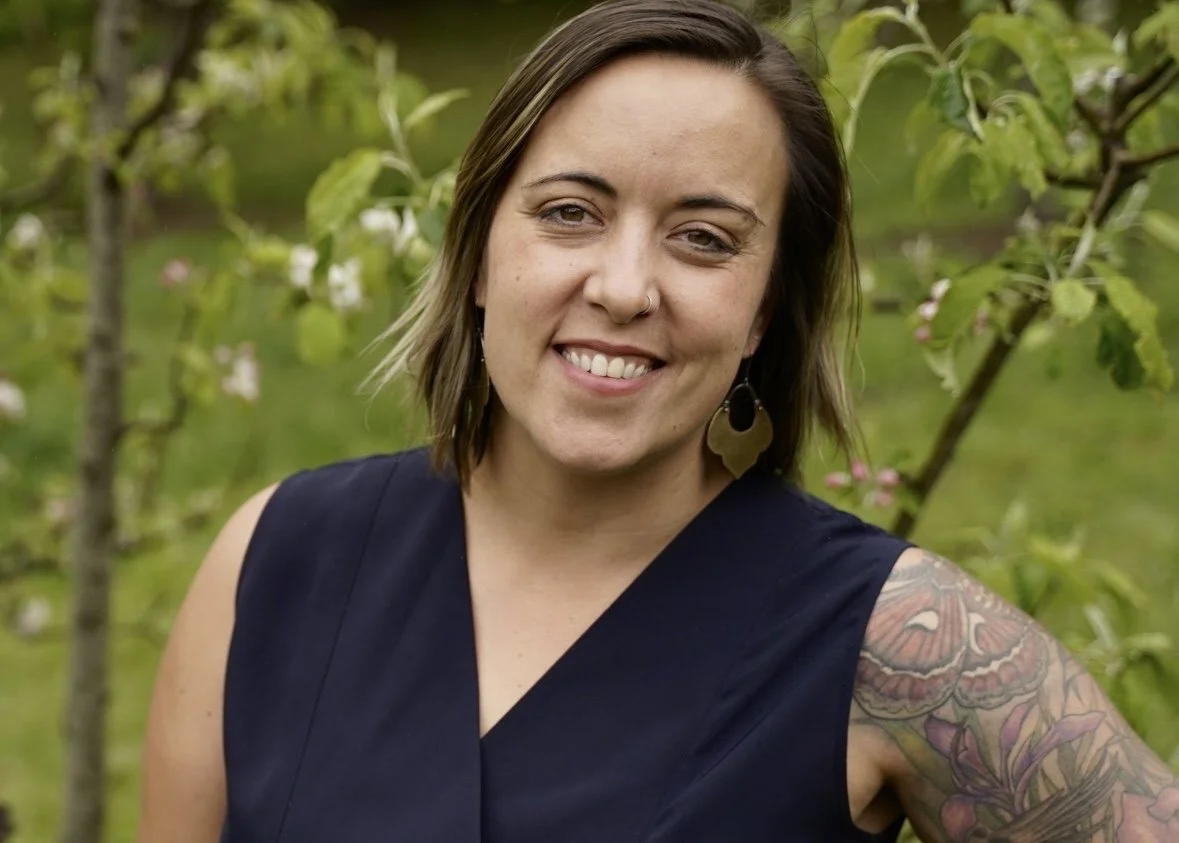
About Me
I lost my mother to ovarian cancer when I was 10, but it wasn’t until my diagnosis with BRCA1 at 30 that I really started to grapple with how hereditary cancer risk would affect every aspect of my life. From the way the diagnosis impacted my marriage, to when and how to have children, decisions about which potential prophylactic surgeries… And through it all: how to self-advocate and stay connected to my own intuition rather than reacting to other people’s fear.
My role as a clinical social worker began working in the foster care and probation systems as a mental health clinician in Santa Rosa, CA. The children that I served were often in crisis, with attachment disruptions, physical, emotional and sexual abuse, and multi-generational trauma. For the next 3.5 years, before going fully into my private practice, I worked in end of life care. In this role, I supported people in their last months, weeks, or days of life to find closure, heal wounds and prepare for their transition. I was an anticipatory grief counselor for the friends and family members that were supporting them in their journey. It was an honor to be of service at this tender and important phase of life, and to hold space for the deep connection with self and purpose that can take place.
Specific Education and training
Bachelor’s of Science in Human Development, UC Davis
Master of Social Work, emphasis in serving indigenous communities, Humboldt State University
Certified Master Therapist in the Neuro Affective Relational Model (NARM), a modality for treating complex and developmental trauma
Certified in InfraSlow Neurofeedback
Experience as Lead Clinician working within the Unconditional Care model, treating families who have experienced developmental trauma
Trained as a Trainer in Unconditional PRIDE, a program for serving LGBTQ+ youth
Trained as a Trainer in Motivational Interviewing
Hospice grief training in William Worden’s Four Tasks of Grief
9 month initiation program in Ancestral Wisdoms: grief ritual facilitation, nature therapy
Wilderness First Responder, nature guide, eco-psychology student
Disclaimer
The content on this website, podcast, and related materials is for informational and educational purposes only. It is not medical advice and does not replace professional diagnosis, treatment, or individualized care.
Therapy services described here are offered by Sara Champie, LCSW, a licensed therapist in the state of California. If you are located outside of California, therapeutic services are not available to you. Coaching and group programs are distinct from therapy and are not a substitute for mental health treatment.
If you are experiencing a medical or psychiatric emergency, please call 911 or go to your nearest emergency room. For mental health crisis support, you can also dial 988 in the U.S. to be connected to the Suicide & Crisis Lifeline.
